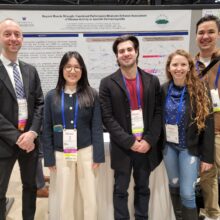
Christian Lood, PhD is an Associate Professor in the Division of Rheumatology at the University of Washington. He was awarded a grant through TMA’s Research Grants Program for a project titled “Mitochondrial Contribution to Juvenile Dermatomyositis.” As he and his team wrap up this investigation, here is some of what they discovered.
Researchers in this study are working to understand the role of mitochondria—the tiny “power plants” inside our cells—in juvenile dermatomyositis (JDM).
First, the team found that children with JDM have certain changes in their mitochondrial DNA. These genetic changes have been linked to other diseases, like diabetes and some brain disorders, but have not been reported in JDM before. The researchers are now studying a larger group of patients to confirm these results and to see whether specific gene changes are tied to particular symptoms. Discovering these DNA differences is important because they may help predict how the disease will progress and could eventually lead to new treatments.
Second, the study found that people with JDM have mitochondria in their blood that reflect how active their disease is—especially when it comes to muscle strength and function. These new markers were even better at tracking disease activity and predicting worsening symptoms than the current blood test doctors often use, called creatine kinase. The team is now testing these markers in a larger group with the goal of creating a new set of tests doctors can use to guide treatment and help families understand what to expect.
“Mitochondria are not supposed to be in the blood,” Dr. Lood says. “They are usually recycled inside of the cell. Once released from the damaged muscle cells into the blood, however, our immune system believes that the mitochondria are harmful bacteria, which causes inflammation. As such, we believe that mitochondria in the blood are not only important markers for disease activity, but a target for treatment as well.”
Third, the researchers began looking at mitochondria inside the muscle itself. They discovered that a molecule involved in inflammation, called interferon, can lower the number of mitochondria in muscle cells, which may make the muscles weaker. This could help explain why some people with JDM struggle with muscle weakness. They also found that platelets—blood cells best known for helping with clotting—can deliver healthy mitochondria to muscle cells and may help restore energy to tired muscles.
Dr. Lood notes that “this is a fascinating new area of research demonstrating how some cells willingly donate their life support, the power plants, to those in more need, to support the common good for the organism, and not the individual good for the donor cell.”
The team is now working to understand how to protect muscle cells from losing their mitochondria (such as by preventing inflammation) and how to help them recover by supplying healthy mitochondria. If successful, these findings could lead to new treatments that improve muscle strength and overall health in JDM.
“There are even clinical trials ongoing in South Korea studying mitochondrial transplantation in myopathies, with the results so far showing good safety profile,” Dr. Lood says.
“It has been a challenging year,” Dr. Lood says, “with the many NIH cuts and delayed funding decisions. As such, TMA’s generous support for our work has been even more so valuable, and allowed for me to keep one of the postdocs who otherwise would have to leave, for which I am very grateful. Despite these challenges, we have had a very successful and productive year.”


