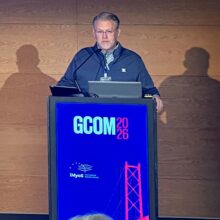
By Rich DeAugustinis
Late last month I had the honor of leading our TMA delegation with TMA Executive Director Paula Eichenbrenner at the Global Conference on Myositis (GCOM) in Lisbon, Portugal. GCOM was an impressive gathering of 500 or so of the foremost researchers and clinicians working on myositis from around the world. It was fantastic to hear the latest scientific developments, and I returned home with great optimism about the future.
One of the things that gives me hope is the rapidly growing use of AI (artificial intelligence) in myositis research and care.
Myositis, as we all know, affects many people worldwide, yet diagnosis and effective care remain a long and challenging road — relying on biopsies, blood tests, and clinical intuition that can delay care and worsen outcomes. Enter AI: a gamechanger with the potential to revolutionize this landscape.
AI is not just buzz—it is a powerful tool harnessing machine learning to analyze vast datasets like patient registries, imaging scans, and genetic profiles. Imagine algorithms detecting subtle patterns in MRIs that human eyes might miss, predicting disease flares before they strike, or personalizing therapies based on patient data.
Studies already show that AI can improve diagnostic accuracy by up to 30%, accelerate drug research and discovery, and even aid in telemedicine for underserved communities.
I believe AI offers promise at all stages of the patient journey, including the possibility of speeding progress toward therapies that could potentially make myositis a manageable chronic condition instead of a debilitating disease.
I had the honor of facilitating a session on AI at GCOM entitled “AI in Myositis: Expert Perspectives.” In the workshop, we had two leading myositis experts share how they are currently using AI in clinical practice and in research.
Dr. Teresa Melo, arheumatologist at Santo António dos Capuchos Hospital in Lisbon, and Dr. Shinji Izuka, a rheumatologist and researcher at the University of Tokyo, joined me in delivering this workshop. We shared real world case studies and discussed where AI might go in the future.
Today, AI is playing a meaningful role in myositis, with clinicians, researchers, and patients. It’s a potent productivity tool that helps healthcare and research professionals do their job more quickly and effectively. It also helps patients to better understand dimensions of their diagnostic and treatment journey. New applications for AI in myositis will continue to exponentially accelerate in the years ahead. I believe this will have very positive implications for the myositis and rare disease community.
In the near future, TMA will offer this workshop for our patient community so you can learn more about how AI is being used in practice in myositis. Look out for more details on that forthcoming zoom session soon.
TMA will continue to lead the way in representing the needs of the myositis community both here in the US and around the world at important events like GCOM.
Rich DeAugustinis is the CEO of DeAugustinis Associates LLC, a business consulting firm, and has significant experience in non-profit leadership. He currently serves as Chair of TMA’s Board of Directors. His father, Augie, who also chaired TMA’s BOD, lives with inclusion body myositis. Readers are invited to contact him directly with any questions or comments at deaugustinis@myositis.org.


