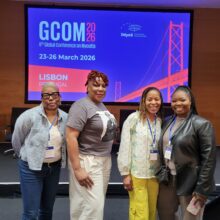
The Global Conference on Myositis (GCOM) 2026, held March 23–26 in Lisbon, brought together researchers, clinicians, patient organizations, and people living with myositis from around the world. This was the sixth of these biannual international gatherings, begun in 2015 by Dr. Ingrid Lundberg, a former member of TMA’s Medical Advisory Board and myositis expert from Sweden. Her hope was to unite the myositis research community in their efforts to better understand immune-mediated myopathies and improve treatment and care. TMA is grateful to Dr. Lundberg as well as Dr. Raquel Marques and her host committee team for organizing the Lisbon conference.

This year’s meeting underscored a defining principle of progress in rare disease: scientific advancement is strongest when patient voices are integrated at every level. That integration was evident throughout the GCOM 2026 program. From opening remarks and plenary sessions to parallel workshops, research posters, and closing reflections, patients were not only present—they were leaders, educators, research partners, and collaborators. TMA was proud to contribute to this global effort through extensive participation by our members, staff, board, and Medical Advisory Board.
Patient Voice as a Throughline, Not a Sidebar

At GCOM 2026, patient involvement was not confined to a single track. Instead, patient perspectives formed a continuous narrative that shaped discussion across scientific, clinical, and community‑focused sessions.

Dedicated “Patient Voice” plenary presentations addressed a wide range of disease manifestations, including lung, gastrointestinal, cardiovascular, and skin involvement, as well as specific subtypes such as inclusion body myositis and juvenile myositis. Speakers also shared their personal journey with cancer‑associated myositis and treatment‑induced disease, offering critical insights into emerging and complex forms of myositis.
By placing these perspectives directly alongside scientific presentations, GCOM reaffirmed that lived experience is essential context for research questions, outcome measures, and clinical priorities.
One of the hallmarks of GCOM 2026 was its robust slate of patient‑led sessions and workshops, many supported or cochaired by TMA leadership.
These sessions explored both current and emerging topics, including:

- Living holistically with myositis, examining how drug therapies intersect with lifestyle changes, nutrition, physical therapy, and functional care
- CAR‑based therapies, where speakers shared real‑world perspectives on navigating a rapidly evolving treatment landscape
- Artificial intelligence in myositis, exploring both promise and practical considerations. Read a recap blog from TMA Board Chair Rich DeAugustinis.
- An interactive workshop on mental health and self‑care, recognizing the psychological burden of chronic disease
- A showcase of international examples of patient‑driven and patient‑partnered research
These sessions made clear that patient expertise extends far beyond storytelling—patients are uniquely positioned to identify unmet needs, assess feasibility, and shape future care models.

TMA’s Impact Across the Scientific Program
TMA’s engagement at GCOM 2026 extended well beyond patient programming. TMA Medical Advisory Board members played active roles as presenters, workshop tutors, and moderators, contributing clinical and methodological expertise in areas such as skin and muscle scoring techniques, autoantibody testing and standardization, and cancer‑associated and treatment‑related myositis

TMA‑supported research was also highlighted through multiple poster presentations, including TMA‑funded studies focused on myositis‑specific autoantibodies and laboratory testing reliability. In addition, TMA presented findings about myositis patient journeys in two poster sessions. “Mental Health Coping Strategies Practiced by People Living with Myositis: Results of a Qualitative Survey” featured insights collected from TMA members during Myositis Awareness Month. TMA also co-presented about the challenges that accompany living with DM or PM along with Corporate Advisory Council (CAC) member Keenova. These important findings further emphasize our commitment to quality‑of‑life research.
Through these contributions, TMA demonstrated our dual role as both a patient advocacy organization and a research partner, helping to advance science that is rigorous, relevant, and patient‑centered.
Building the Future of Myositis Research Together
One of the conference’s most resonant sessions, “Building a Myositis Research Community: The Intersection of Patient Voices and Scientific Discovery,” brought together international patient advocates to address caregiver burden, overlooked symptoms, and global awareness efforts such as World Myositis Day. This session captured the spirit of GCOM 2026: collaboration, mutual respect, and a shared commitment to meaningful progress.

GCOM 2026 made it clear that the future of myositis research depends on authentic partnership among patients, clinicians, researchers, and advocacy organizations. By embedding patient voices throughout the scientific program, the conference set a powerful example of what inclusive research can—and should—look like.
TMA is proud to have participated in and supported a conference that reflects our mission to improve the lives of those affected by myositis through research, education, support, and advocacy—on a truly global scale.


